Most roofs around Huntsville are sloped shingle roofs, so when a house has a flat section, folks tend to treat it like the same thing with the pitch taken out. It isn't. A flat roof sheds water in a completely different way, it fails in different spots, and it wants a different kind of surface on top of it. Get that part wrong and you end up chasing the same leak every spring. So here's a straight rundown of how we handle flat and low-slope roofs in North Alabama, when one can be patched instead of torn off, and what actually drives the bill.
Why a flat roof is its own animal
First thing worth saying: almost no roof is truly flat. What people call a flat roof is really a low-slope roof, built with just enough pitch to nudge water toward a drain or an edge. A steep shingle roof gets rain off in seconds because gravity does the work. A low-slope roof moves it slowly, so water sits up there longer and goes looking for any seam, screw, or soft spot it can find.
That's the whole reason flat roofs can't use shingles. Shingles are built to shed fast-moving water down a slope, and they leak the second water pools or backs up under them. A flat roof needs one continuous waterproof surface instead, a membrane, with no little laps for water to creep beneath. You see these on home additions, sunrooms, carports, porch roofs, and a lot of the small commercial buildings around town.
Ponding water is the thing to watch
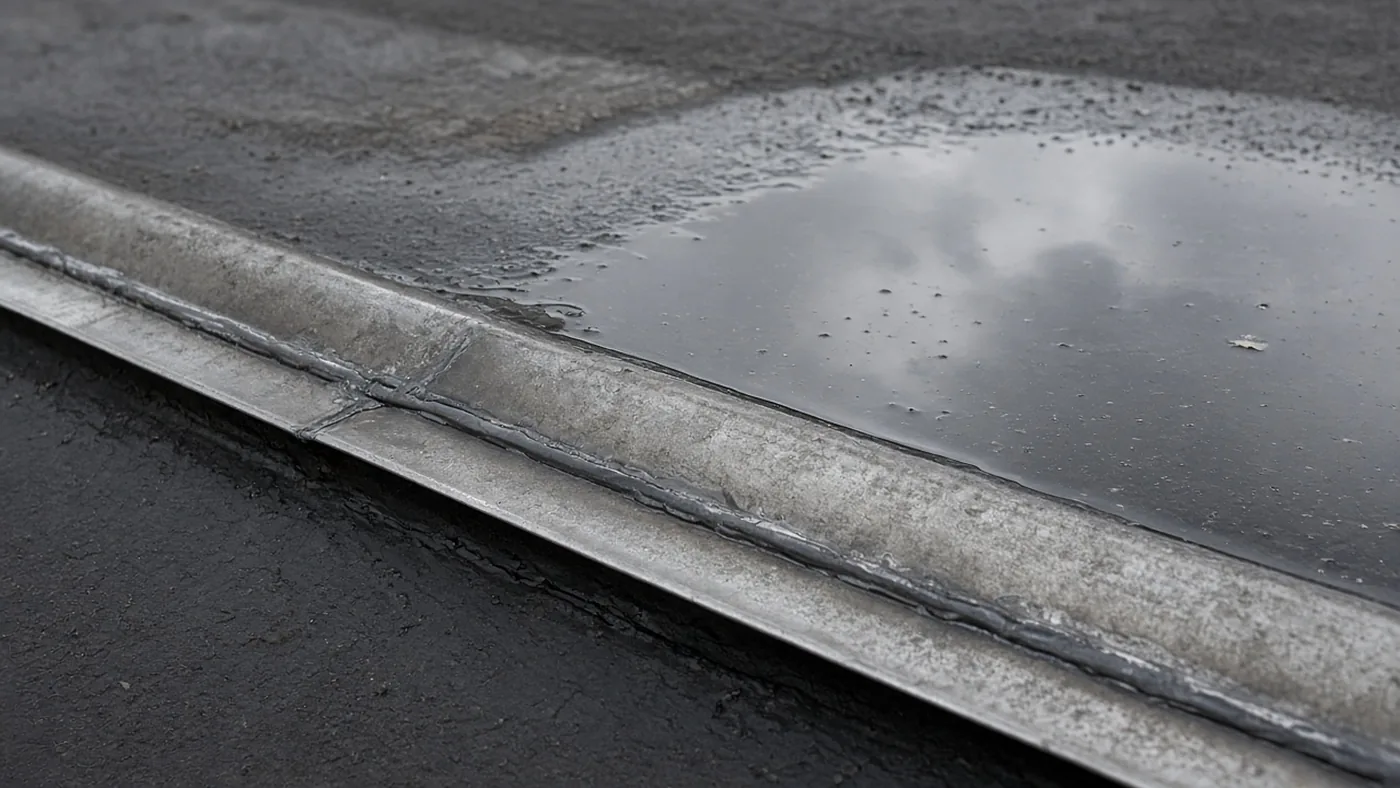
If water stands on a flat roof more than a day or two after a storm, that's ponding, and it's the single biggest killer of low-slope roofs. It works on seams, bakes the membrane under the sun, and finds the one low spot the deck has settled into. Our roof inspection on any flat roof starts with where the water goes after a rain.
The flat-roof surfaces we install
There are three membranes that cover just about every flat roof we touch in North Alabama. None of them is the right answer for every building, so here's the honest version of what each one is good at:
- EPDM is the black rubber sheet you've probably seen on commercial roofs. It's tough, it handles our sun and temperature swings well, and it's been proven on roofs for decades. The classic workhorse.
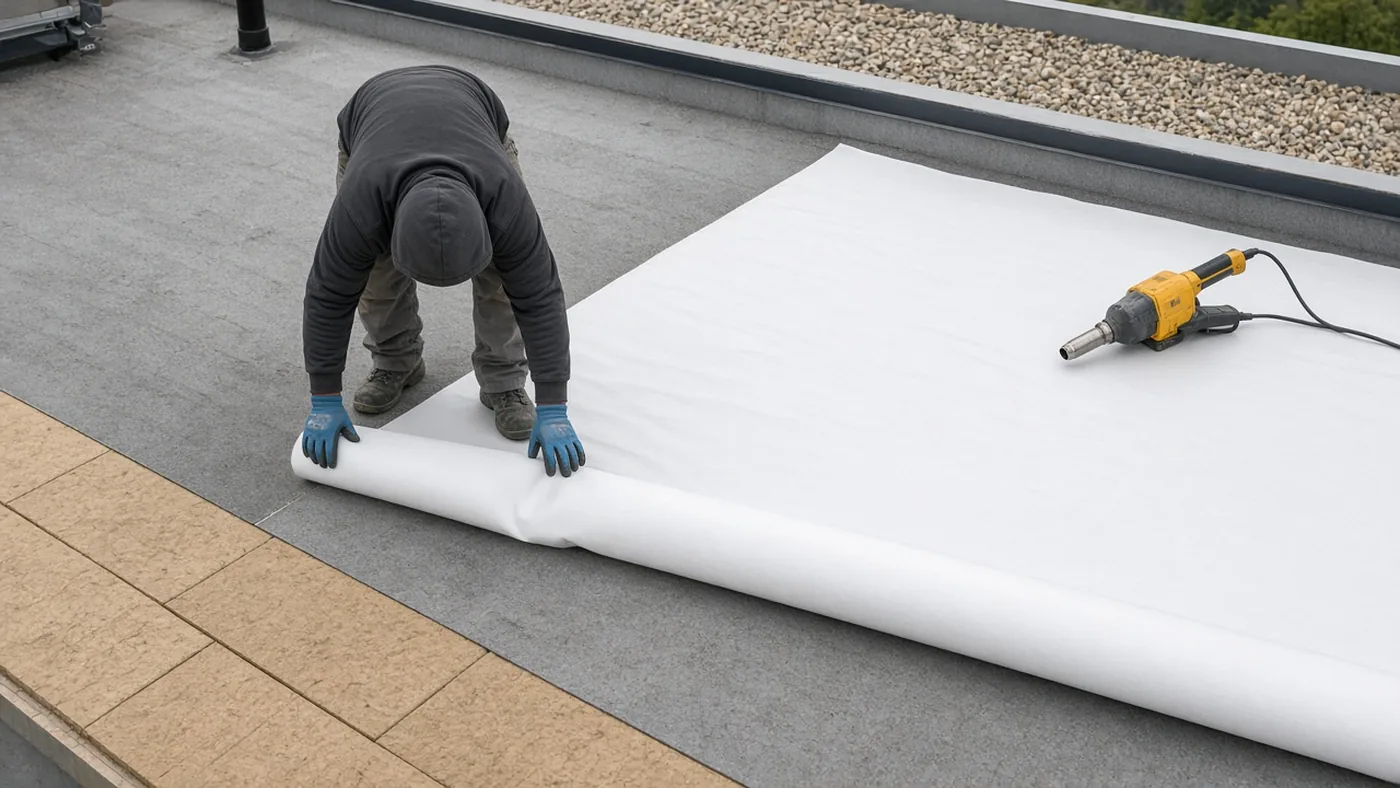
- TPO is a single-ply membrane, usually white, with heat-welded seams instead of glued ones. The white surface reflects heat, which is a real plus on an Alabama summer, and the welded seams make for a strong watertight joint.
- Modified bitumen is an asphalt-based system rolled on in layers. It's a good fit on roofs that see foot traffic, since it stands up to people walking on it better than a thin single-ply.
Which one we'd put on your roof comes down to the building, how much sun it takes, whether anybody walks on it, and your budget. We talk through the trade-offs the same way we do when we help homeowners weigh materials in our guide on picking roofing materials for Alabama weather. There's no single best membrane, only the right one for the roof in front of us.
Repair or replace: how we call it
Not every flat-roof leak means a tear-off. Plenty of the calls we run are a failed seam, a split around a pipe boot, or edge flashing that's lifted, and those are a repair, not a new roof. The membrane itself can have years left while one detail lets go.
When we lean toward replacement is when the problems stop being one spot. A membrane that's cracked and brittle across the whole roof, ponding that's soaked the insulation below, or a deck that's gone soft in more than one place, that's a roof telling you patching is just buying time. We'd rather be straight with you about that than sell you three repairs in two years that add up to a new roof anyway.
A wet deck changes the math
Once water has worked past the membrane and into the insulation and decking, a surface patch traps that moisture instead of fixing it. If the deck is wet or spongy underfoot, the honest fix is to open it up, dry or replace what's rotted, and re-roof that section. We'll show you the soft spots so it isn't a judgment call you have to take on faith.
What drives the cost of a flat roof
Flat roofs get priced by the square, which is roofer-speak for a 100-square-foot patch, or by the square foot. We're not going to throw a dollar figure at you here, because the honest truth is the number swings a lot with the specifics of the roof, and a made-up range doesn't help you plan. What's more useful is knowing what actually moves it, so you can read a quote and tell whether it's fair:
- Size and access. More square footage costs more, and a roof that's a pain to get materials onto adds labor.
- Which membrane. EPDM, TPO, and modified bitumen don't price the same, and the thickness of the membrane matters too.
- Tear-off versus overlay. Pulling the old roof and hauling it off costs more than going over a sound existing surface, but an overlay only works when what's underneath is dry and in good shape.
- Insulation. Low-slope roofs usually carry rigid insulation under the membrane, and adding or replacing it is part of the price.
- Deck repair. Any rotted or wet decking found during tear-off gets fixed before the new membrane goes down, and that's carpentry on top of the roofing.
- Drainage work. If the roof ponds, fixing the slope, drains, or scuppers so water actually leaves is money well spent and part of a roof that lasts.
The only way to get a real number is to have somebody measure the roof and look at what's under the membrane. A free inspection gets you a written estimate with the membrane, the square footage, and any deck or drainage work spelled out, so you know exactly what you're paying for and why.
When a storm is what took it out
Flat roofs take a beating from the same North Alabama storms that tear up shingle roofs. Wind can peel a membrane back at the edge, hail can bruise and puncture it, and a hard enough blow can open a seam. When the damage traces back to a storm, there's often a claim in it.
We document flat-roof storm damage the same careful way we handle a shingle roof, with photos and a written assessment your adjuster can work from. If you think weather is behind your leak, our storm damage repair team can get up there fast, and our insurance claims help walks you through the filing so you aren't doing it alone.
How a Hopper flat roof job works
- We get up on the roof, find where the water's going, and check the membrane, the seams, the flashing, and whether the deck underneath is still solid.
- You get a written estimate that names the membrane, the square footage, the tear-off or overlay call, and any deck or drainage work, so nothing's a surprise.
- We pull the old roof where it needs pulling, fix any wet or rotted decking, and set the insulation so the new surface has a sound base.
- We lay the new membrane as one continuous surface, weld or seal every seam, flash the edges and penetrations tight, and make sure water has a clear path off the roof.
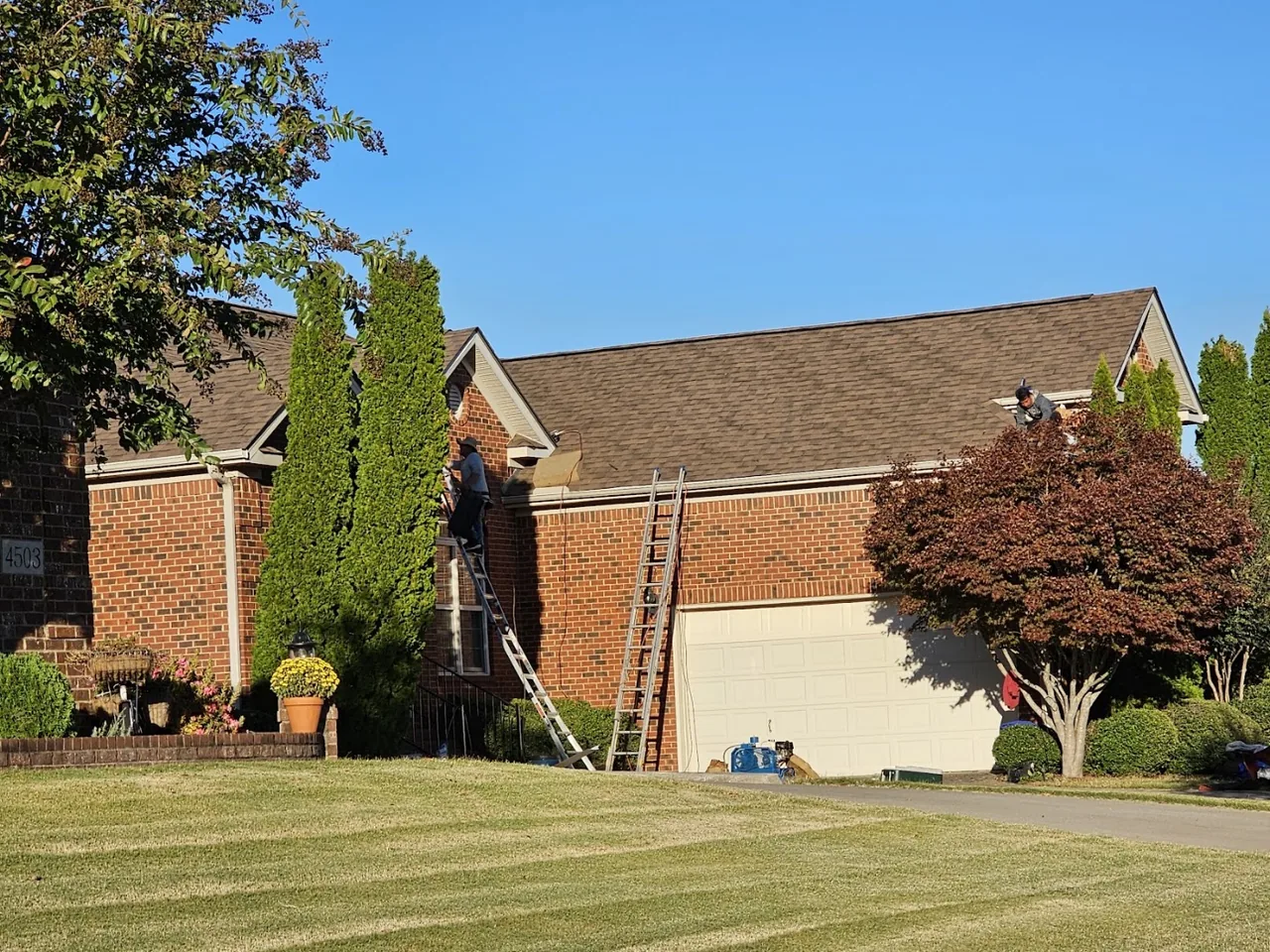
We cover Huntsville, Madison, and the rest of the Tennessee Valley for flat and low-slope work. For a full commercial building with a larger flat roof, a maintenance program, or after-hours scheduling, that lives under our commercial roofing service, which is built around the whole building rather than a single section.
Signs your flat roof needs a look
Flat roofs hide their problems better than sloped ones, because you can't see the trouble from the ground. These are the things worth getting checked before a small leak turns into a wet ceiling:
- Water standing on the roof more than a day or two after it rains.
- Bubbles, blisters, or wrinkles in the membrane surface.
- Seams or flashing that have lifted, split, or pulled loose.
- Water stains on the ceiling or at the top of an interior wall under the flat section.
- A spongy or soft feel underfoot when you walk the roof.
- Cracking or a dried, brittle look across an older membrane.
If a few of these show up together, don't wait for the next storm to force the issue. Catching a flat roof early is usually the difference between a repair and a replacement. Our roof inspection checklist covers what a thorough look includes, and if you're weighing how much life is left in the roof overall, we get into that in how long a roof lasts in Alabama.